
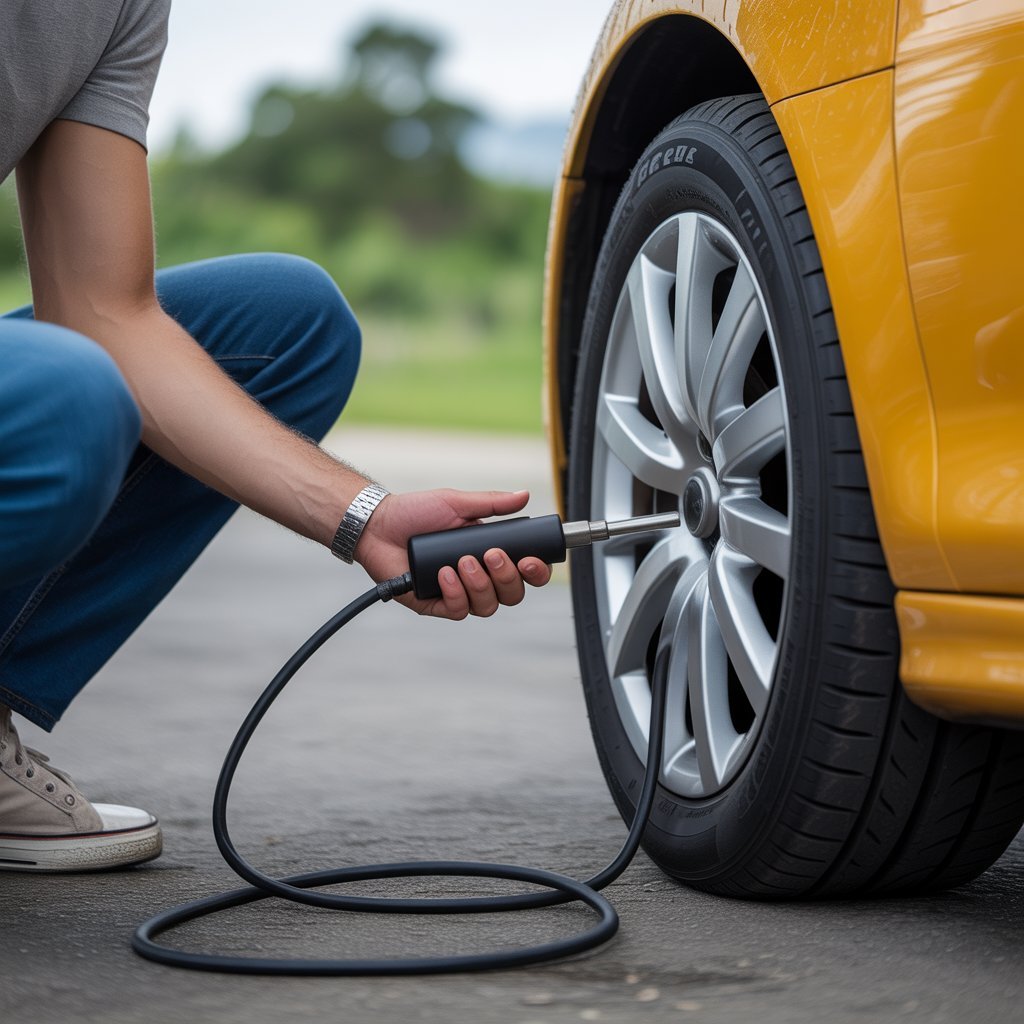
Knowing how to check tire pressure is one of the simplest yet most important car maintenance skills any driver can learn. Many people focus on engine oil, fuel economy, or brake pads, but they often ignore their tires until something goes wrong. The truth is that your tires affect nearly every part of your driving experience, including safety, handling, fuel efficiency, ride comfort, and even how long your tires last. When tire pressure is too low or too high, your vehicle can become harder to control, your tires can wear unevenly, and your fuel costs can quietly rise over time. According to the U.S. National Highway Traffic Safety Administration, tires should be checked when they are cold, and the correct pressure should come from the vehicle placard or owner’s manual, not the number molded on the tire sidewall.
The good news is that learning how to check tire pressure does not require advanced tools or mechanical experience. You can do it in just a few minutes with a simple tire pressure gauge and access to an air pump. Once you understand where to find the correct PSI, when to measure it, and how to adjust it properly, you will be able to keep your vehicle in much better condition. In this article, you will learn everything you need to know, from the tools required and the exact steps to follow, to common mistakes, seasonal pressure changes, dashboard warning lights, and frequently asked questions. If you want a complete beginner-friendly guide that is also practical and detailed, this article will give you exactly that.
How to Check Tire Pressure the Right Way
If you want to know how to check tire pressure correctly, the most important thing to understand is that accuracy matters. Tire pressure is measured in PSI (pounds per square inch), and every vehicle has a recommended PSI range set by the manufacturer. This recommended pressure is designed specifically for your vehicle’s weight, suspension, and tire size. That means the correct pressure for your car may be very different from another car, even if both look similar. One of the biggest mistakes drivers make is reading the number printed on the sidewall of the tire and assuming that is the correct target. It is not. That sidewall number usually represents the maximum allowable pressure, not the ideal everyday pressure for your vehicle.
To check tire pressure properly, you need to do it when the tires are cold, which means the car has not been driven for at least three hours or has only been driven a very short distance at low speed. When tires heat up during driving, the air inside expands and raises the pressure reading. That can give you a false impression that your tires are properly inflated when they are actually low. A correct cold reading gives you the most reliable result and helps you make the right adjustment. This is why experienced mechanics and tire manufacturers always recommend checking pressure before a morning drive or after the vehicle has been parked for several hours. Once you build this into your monthly routine, it becomes quick, easy, and highly beneficial.
Why Knowing How to Check Tire Pressure Is Important
Understanding how to check tire pressure is not just about maintenance; it is directly tied to your safety on the road. Underinflated tires can cause poor steering response, longer braking distances, reduced cornering stability, and excessive heat buildup. That extra heat can damage the internal structure of the tire and increase the risk of a blowout, especially during long highway trips or in hot weather. Overinflated tires can also be a problem because they reduce the amount of tire touching the road, which can lower traction and cause the center of the tread to wear out faster. Both conditions shorten tire life and reduce driving confidence.
There is also a financial reason to care about tire pressure. Improperly inflated tires can increase rolling resistance, which forces your engine to work harder and use more fuel. Over time, that means more money spent at the fuel station and more frequent tire replacements. Even a small pressure difference can add up over weeks and months. Properly inflated tires also help your vehicle carry loads more safely, whether you are commuting alone, traveling with family, or transporting heavy luggage. In short, if you know how to check tire pressure, you are protecting your car, improving performance, saving money, and reducing avoidable risk every time you drive.
What You Need Before You Check Tire Pressure
Before learning how to check tire pressure, it helps to gather a few basic tools. The most important item is a tire pressure gauge. These are available in several types, including pencil-style gauges, dial gauges, and digital gauges. All of them can work well if they are accurate and easy for you to read. Many drivers prefer digital gauges because they are fast and clear, especially in low light or for beginners who are not used to reading mechanical indicators. You can keep one in your glove compartment or trunk so it is always available when needed. Michelin also notes that some gas station gauges may not always be perfectly reliable, so having your own gauge is often the better option.
You will also need access to the recommended PSI information for your vehicle. You can usually find this on a sticker inside the driver’s door jamb, inside the fuel door on some vehicles, or in the owner’s manual. In many cars, the front and rear tires may require different PSI levels, especially if the vehicle is designed to carry more weight in one end or if it uses different tire sizes. Some vehicles also list separate PSI recommendations for normal driving and full-load driving. Finally, it is helpful to have access to an air compressor or air pump, either at home or at a service station, so you can add air immediately if needed. With just these few things, you are fully prepared to check and adjust tire pressure correctly.
Where to Find the Correct Tire Pressure for Your Vehicle
One of the most essential parts of learning how to check tire pressure is knowing where the correct pressure information comes from. Many drivers assume that the tire itself tells them the correct pressure, but that is not how tire inflation works. The tire sidewall only tells you the tire’s maximum pressure capacity or load rating, which is not the same thing as your car’s recommended daily operating pressure. The correct PSI is determined by the vehicle manufacturer, not just the tire brand. That recommendation is based on how your car is designed to perform safely under normal driving conditions.
The most common place to find the correct tire pressure is the driver’s side door jamb sticker, often called the Tire and Loading Information Label. When you open the driver’s door, you will usually see a label showing front and rear tire sizes, recommended PSI, and load information. If you do not find it there, check your owner’s manual. Some vehicles also place tire pressure information inside the fuel door or glove compartment. If your vehicle has a spare tire, there may be a separate recommended PSI for that as well. Once you know where to find this number, you can avoid guesswork and make sure you are using the correct target every time you check your tires.
Step-by-Step: How to Check Tire Pressure at Home
The easiest way to understand how to check tire pressure is to follow a simple step-by-step process. Start by making sure your vehicle has been parked long enough for the tires to cool down. Ideally, do this early in the morning before driving. Park on a flat surface so your readings are consistent. Once the tires are cold, locate the correct PSI for your front and rear tires using the door sticker or owner’s manual. Then take your tire pressure gauge and walk to the first tire.
Remove the small valve cap from the tire and keep it somewhere safe so it does not get lost. Press the tire pressure gauge firmly onto the valve stem. You may hear a brief hiss of air, which is normal, but you want to make sure the gauge seals quickly and cleanly. The gauge will show a PSI reading. Compare that number to your vehicle’s recommended PSI. If the reading is lower than recommended, the tire needs air. If it is higher, you need to release a small amount. Repeat the same process for all four tires, and do not forget the spare if your vehicle has one. This entire routine usually takes less than ten minutes, but it can prevent much bigger problems later. NHTSA recommends checking all tires, including the spare, at least once a month.
How to Add Air After You Check Tire Pressure
Once you learn how to check tire pressure, the next step is knowing how to correct it. If your tire is underinflated, you will need to add air until it reaches the recommended PSI. This can be done with a portable home compressor or an air machine at a gas station. Attach the air hose to the tire valve and begin inflating in short bursts rather than continuously. This gives you more control and reduces the chance of overfilling the tire. After adding a little air, stop and recheck the pressure with your gauge. Keep repeating until the tire reaches the correct PSI.
If you accidentally put in too much air, do not worry. You can release pressure by pressing the small metal pin inside the valve stem, often using the back of your tire gauge or a similar tool. Let out a little air at a time and keep checking until the reading is correct. The goal is not just to “fill the tire,” but to match the exact recommended cold PSI as closely as possible. That is what ensures balanced wear, proper traction, and safer handling. If you are doing this at a service station and the gauge there seems inconsistent, double-check the final reading with your own personal gauge for better accuracy.
How to Check Tire Pressure When Tires Are Warm
Many drivers ask if they can still learn how to check tire pressure after they have already been driving. The short answer is yes, but the reading will not be as accurate as a cold reading. When tires are warm, the air inside expands, and the PSI increases naturally. This means a warm tire may look properly inflated even if it would actually be low once cooled down. That is why cold readings are always the standard recommendation from tire and safety experts.
If you must check or add air while the tires are warm, you should avoid letting air out simply to match the cold PSI listed on the sticker. A warm tire showing the “cold” number may actually be underinflated once it cools. Some tire guidance suggests adding a few extra PSI when inflating warm tires and then rechecking later when the tires are cold. The safest approach is to use a warm check only as a temporary adjustment and then verify everything again later under cold conditions. This is especially important before long trips, highway driving, or driving in very hot weather, where tire stress increases significantly.
How to Check Tire Pressure With a TPMS Warning Light
Modern vehicles often include a Tire Pressure Monitoring System (TPMS), and this can be helpful, but it should never replace manual checking. If you want to know how to check tire pressure when the warning light comes on, the first thing to remember is that the light usually means at least one tire is already significantly underinflated. It does not usually warn you the moment pressure starts to drop. That means by the time the dashboard symbol appears, you should inspect and measure your tires as soon as possible. NHTSA states that TPMS is a safety feature, but it is not a substitute for regular monthly pressure checks.
If the TPMS light comes on steadily, check all four tires and inflate them to the recommended PSI. If the light flashes and then stays on, that can indicate a system malfunction rather than just low pressure. In some vehicles, the light may stay on briefly after inflation until you drive for a short distance. Cold mornings can also trigger a temporary warning because lower temperatures reduce tire pressure. The best way to handle a TPMS alert is not to guess which tire is the problem but to manually inspect and measure every tire. That habit gives you far more control and prevents you from relying too heavily on dashboard automation.
Seasonal Tire Pressure Changes You Should Know
A very useful part of learning how to check tire pressure is understanding how weather affects your tires. Tire pressure changes naturally as outside temperatures rise and fall. In colder weather, the air inside the tire contracts, which lowers the PSI. In warmer weather, the air expands and raises the PSI. This is why a tire that seemed fine a few weeks ago may suddenly trigger a low-pressure warning during a cold morning. Some manufacturer guidance notes that tire pressure can drop by about 1 PSI for every 10°F (about 6°C) drop in temperature.
This means seasonal checks are especially important. As summer turns into winter or during sudden weather shifts, you should not assume your tires are still at the correct level. A good habit is to check your tire pressure more frequently during seasonal transitions and before any long road trip. In hot climates, it is equally important not to overreact to higher warm-tire readings and release too much air. Always return to the cold-pressure method as your main reference. Understanding this seasonal behavior helps you avoid false alarms, improve tire longevity, and keep your vehicle performing consistently all year.
Common Mistakes to Avoid When Checking Tire Pressure
Even if someone knows the basics of how to check tire pressure, a few common mistakes can still lead to poor results. One of the biggest errors is checking tire pressure immediately after driving and assuming the number is accurate. Another very common mistake is inflating the tires based on the number printed on the tire sidewall instead of the vehicle’s recommended PSI. That can lead to overinflation, rougher handling, and uneven tire wear. Drivers also sometimes ignore the spare tire completely, only to discover it is flat when they actually need it.
Another mistake is using a gauge carelessly. If the gauge is not pressed firmly onto the valve stem, you may get a false reading because air escapes before the measurement is taken. Some people also remove air from a hot tire to make the number “look right,” which can leave the tire dangerously underinflated once it cools down. Others wait until the TPMS light comes on rather than checking pressure regularly. The best way to avoid all these issues is to build a simple habit: check pressure monthly, use your own reliable gauge, verify the recommended PSI from the vehicle label, and make small careful adjustments instead of rushing the process.
How Often Should You Check Tire Pressure?
If you are serious about understanding how to check tire pressure, you also need to know how often to do it. The best rule is to check your tire pressure at least once a month and always before a long trip. Even if your tires look fine, they can still lose air gradually over time. Tire pressure loss is not always caused by punctures. It can happen naturally through temperature changes, slow leaks, valve wear, or tiny imperfections that are hard to see. That is why visual inspection alone is not enough. A tire can look normal and still be significantly underinflated.
Monthly checks help you catch small issues before they become expensive or dangerous. They also help you notice patterns. For example, if one tire consistently loses more pressure than the others, that may suggest a slow puncture, a damaged valve stem, or a wheel sealing problem. In that case, it is wise to have the tire professionally inspected. Making tire pressure checks part of your monthly car routine is one of the easiest habits you can build, and it pays off in better safety, lower costs, and smoother driving over time.
Final Thoughts on How to Check Tire Pressure
Learning how to check tire pressure is one of the most practical and valuable skills any vehicle owner can have. It does not require expensive tools, technical training, or much time, yet it has a direct impact on your safety, fuel efficiency, tire lifespan, and driving comfort. The key is to remember the fundamentals: always check your tires when they are cold, use the PSI listed on the vehicle’s door sticker or owner’s manual, not the sidewall, and inspect all four tires plus the spare on a regular basis. A simple five-to-ten-minute check each month can prevent poor handling, uneven wear, wasted fuel, and even dangerous tire failures.
If you make tire pressure checks part of your normal maintenance routine, you will gain more confidence every time you drive. Instead of waiting for a warning light, a flat tire, or unusual handling to tell you something is wrong, you will be staying ahead of the problem. That is what smart vehicle care is all about. Tire pressure may seem like a small detail, but it plays a major role in keeping your vehicle safe and efficient. Once you know how to do it properly, it becomes one of the easiest and most useful car-care habits you can maintain.
Frequently Asked Questions (FAQs)
1. How do I know the correct tire pressure for my car?
You can find the correct tire pressure on the driver’s side door jamb sticker, in the owner’s manual, or sometimes inside the fuel door. Do not use the PSI number printed on the tire sidewall because that is usually the maximum tire pressure, not the recommended operating pressure for your vehicle.
2. When is the best time to check tire pressure?
The best time to check tire pressure is when the tires are cold, meaning the vehicle has been parked for at least three hours or driven only a very short distance. This gives you the most accurate reading.
3. How often should I check tire pressure?
You should check your tire pressure at least once a month and also before long trips. It is also smart to check it when seasons change, especially when temperatures drop suddenly.
4. Can I check tire pressure without a gauge?
You can inspect a tire visually, but you cannot accurately measure tire pressure without a gauge. Tires can look normal and still be underinflated. A tire pressure gauge is the only reliable way to know the actual PSI.
5. Is it okay to rely only on the TPMS warning light?
No, the TPMS warning light is helpful, but it is not a replacement for manual checks. It usually comes on only after a tire is already significantly underinflated. You should still check your tires manually every month.
6. What happens if my tire pressure is too low?
Low tire pressure can cause poor fuel economy, uneven wear, reduced grip, longer braking distances, overheating, and a higher risk of tire failure or blowouts. It can also make the car feel less stable while driving.
7. What happens if my tire pressure is too high?
Overinflated tires can lead to a harsher ride, reduced traction, and faster wear in the center of the tread. It may also reduce how evenly the tire contacts the road.
8. Should I check the spare tire too?
Yes, you should absolutely check the spare tire as well. Many drivers forget it, but it may be unusable in an emergency if it has lost too much air over time.
