
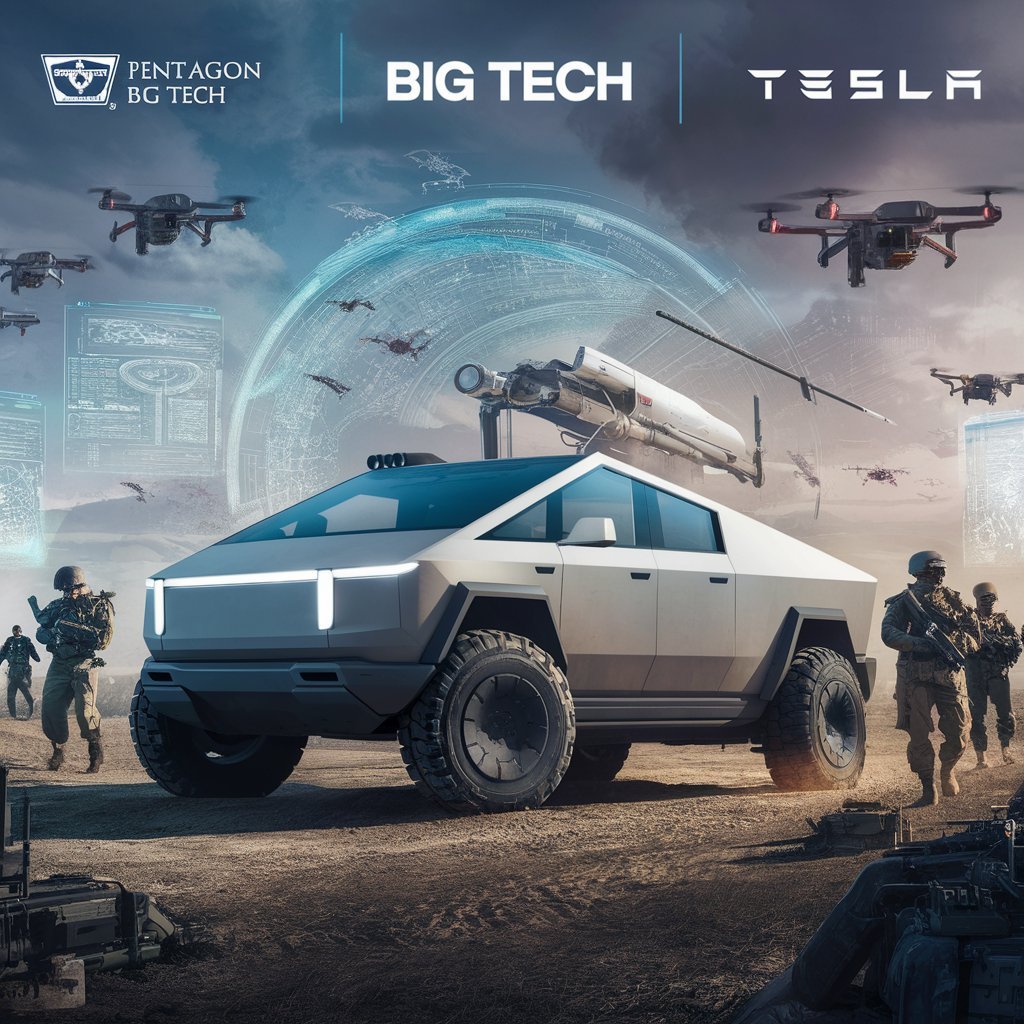
In recent years, the relationship between government institutions and technology companies has grown stronger and more complex. The collaboration between the Pentagon, big tech companies, and innovative manufacturers like Tesla has sparked conversations about the future of defense technology, transportation, and national security. One vehicle that has captured global attention is the futuristic Tesla Cybertruck, an electric pickup designed by Elon Musk and produced by Tesla. Its rugged design, powerful electric drivetrain, and advanced technology have led some experts to wonder whether such vehicles could play a role in future military or government operations.
At the same time, the United States Department of Defense, commonly known as the Pentagon, has been increasingly partnering with big tech companies to accelerate innovation in areas such as artificial intelligence, cybersecurity, autonomous systems, and advanced vehicles. These collaborations highlight how modern warfare and national defense are becoming deeply intertwined with commercial technological advancements. The intersection of the Pentagon, big tech, and the Tesla Cybertruck represents a fascinating glimpse into how future military mobility, sustainability, and technological dominance might evolve.
Pentagon and Big Tech Collaboration
The Pentagon has long relied on partnerships with private industry to maintain technological superiority. In the past, defense contractors like Lockheed Martin, Raytheon, and Northrop Grumman dominated military innovation. However, the rise of big tech companies has shifted the landscape. Today, companies such as Google, Microsoft, and Amazon are involved in projects related to artificial intelligence, cloud computing, and data analytics for defense purposes.
These collaborations aim to help the Pentagon process massive amounts of data, improve battlefield awareness, and create smarter defense systems. Big tech companies provide expertise in machine learning, advanced computing infrastructure, and cybersecurity solutions. By working together, the Pentagon and big tech are building systems capable of responding faster to emerging threats and adapting to the rapidly evolving digital battlefield.
At the same time, this partnership raises ethical and political debates. Some critics argue that the involvement of large technology companies in defense operations could lead to concerns about privacy, surveillance, and the militarization of commercial technologies. Nonetheless, the demand for cutting-edge innovation ensures that cooperation between big tech and the Pentagon will likely continue expanding in the coming years.
Tesla Cybertruck and Its Revolutionary Design
The Tesla Cybertruck is one of the most unconventional vehicles ever introduced to the market. With its angular stainless-steel body, armored exterior, and electric powertrain, it represents a radical departure from traditional pickup truck designs. Built with ultra-hard stainless steel and armored glass, the Cybertruck was engineered to be both durable and futuristic.
Unlike conventional trucks that rely on gasoline or diesel engines, the Cybertruck operates entirely on electric power. This allows it to deliver exceptional torque, rapid acceleration, and reduced maintenance requirements. Electric vehicles also produce fewer emissions, making them more environmentally friendly compared to traditional combustion-engine vehicles.
Another major feature of the Cybertruck is its advanced technology. The vehicle integrates autonomous driving capabilities, powerful onboard computing systems, and seamless connectivity. These characteristics make it appealing not only to consumers but also to organizations exploring the future of transportation and logistics. Its durability and off-road capability have led some analysts to speculate about potential applications beyond civilian markets.
Could the Pentagon Be Interested in the Tesla Cybertruck?
Although the Pentagon has not officially adopted the Tesla Cybertruck, the concept of electric military vehicles has attracted growing interest among defense planners. Electric vehicles offer several advantages for military use, including quieter operation, fewer mechanical components, and reduced dependence on fuel supply chains.
Traditional military vehicles rely heavily on diesel fuel, which must be transported through long and vulnerable supply lines. Electric vehicles could potentially reduce this logistical burden by relying on portable charging systems or renewable energy sources. In combat situations where stealth and efficiency are crucial, quieter electric motors could also provide tactical advantages.
The rugged structure of the Cybertruck might make it suitable for specialized roles such as reconnaissance, transport, or support missions. However, military requirements are extremely strict, and vehicles must meet specific standards for armor, communication systems, and battlefield durability. While the Cybertruck might inspire future designs, any military version would likely require significant modifications.
The Role of Big Tech in Future Military Vehicles
Big tech companies are increasingly involved in developing the digital infrastructure that powers modern defense equipment. Artificial intelligence, sensor networks, and autonomous systems are becoming key components of next-generation military vehicles.
For example, AI-driven systems can analyze battlefield data in real time, helping commanders make faster decisions. Advanced navigation technology allows vehicles to operate autonomously in complex environments, while cybersecurity systems protect critical communications from cyberattacks.
Electric vehicles like the Cybertruck could integrate seamlessly with these technologies. With powerful onboard computing systems and software-driven architecture, electric vehicles can be updated and improved through software updates. This flexibility aligns with the Pentagon’s goal of creating adaptable and upgradeable military platforms that remain effective in rapidly changing technological environments.
Challenges and Concerns
Despite the excitement surrounding electric vehicles and big tech partnerships, several challenges remain. Military vehicles must operate in extreme environments, including deserts, mountains, and combat zones where charging infrastructure may not exist. Battery technology must also improve to ensure longer operational ranges and faster recharging times.
Another concern involves cybersecurity. As vehicles become more connected and software-driven, they could become targets for hacking or electronic warfare. Protecting these systems requires advanced encryption and secure communication networks.
There are also strategic and political considerations. The relationship between big tech companies and the Pentagon sometimes sparks controversy, especially when employees or the public question the ethical implications of military projects. Balancing innovation with responsible oversight will remain an ongoing challenge.
The Future of Defense Innovation
The collaboration between the Pentagon, big tech, and innovative companies like Tesla represents a broader shift toward technology-driven defense strategies. As artificial intelligence, robotics, and electric vehicles continue to evolve, military organizations around the world are exploring how these technologies can enhance efficiency, sustainability, and strategic capability.
While the Tesla Cybertruck itself may or may not become a military vehicle, it symbolizes the kind of bold engineering and forward-thinking design that could inspire future defense technologies. The blending of commercial innovation with national security priorities will likely shape the next generation of military systems.
Conclusion
The intersection of the Pentagon, big tech, and the Tesla Cybertruck highlights how modern defense strategies are becoming increasingly connected to the commercial technology sector. As governments seek faster, smarter, and more sustainable solutions, partnerships with innovative companies are becoming essential.
Electric vehicles, artificial intelligence, and advanced computing systems are transforming how military forces operate and prepare for future challenges. Although the Cybertruck was designed primarily for civilian use, its technology and design reflect broader trends that could influence defense innovation. Ultimately, the collaboration between the Pentagon and big tech companies will play a critical role in shaping the future of transportation, security, and technological progress.
Frequently Asked Questions (FAQs)
1. What is the Tesla Cybertruck?
The Tesla Cybertruck is an all-electric pickup truck developed by Tesla and introduced by Elon Musk. It features a futuristic design, stainless-steel body, powerful electric motors, and advanced technology such as autonomous driving capabilities.
2. Is the Pentagon using Tesla Cybertrucks?
As of now, the United States Department of Defense has not officially adopted the Cybertruck for military use. However, the idea of electric military vehicles is gaining interest as part of future defense strategies.
3. Why is the Pentagon working with big tech companies?
The Pentagon collaborates with big tech companies to access advanced technologies such as artificial intelligence, cloud computing, cybersecurity, and data analysis. These tools help improve national defense capabilities and decision-making.
4. Could electric vehicles replace traditional military vehicles?
Electric vehicles could play a role in the future of military transportation, but they are unlikely to completely replace traditional vehicles in the near term. Challenges such as charging infrastructure, battery range, and battlefield durability must still be addressed.
5. What role might Tesla play in future defense technology?
While Tesla primarily focuses on consumer vehicles and energy solutions, its innovations in electric mobility, battery technology, and autonomous systems could influence future military vehicle designs or inspire new defense technologies.
