
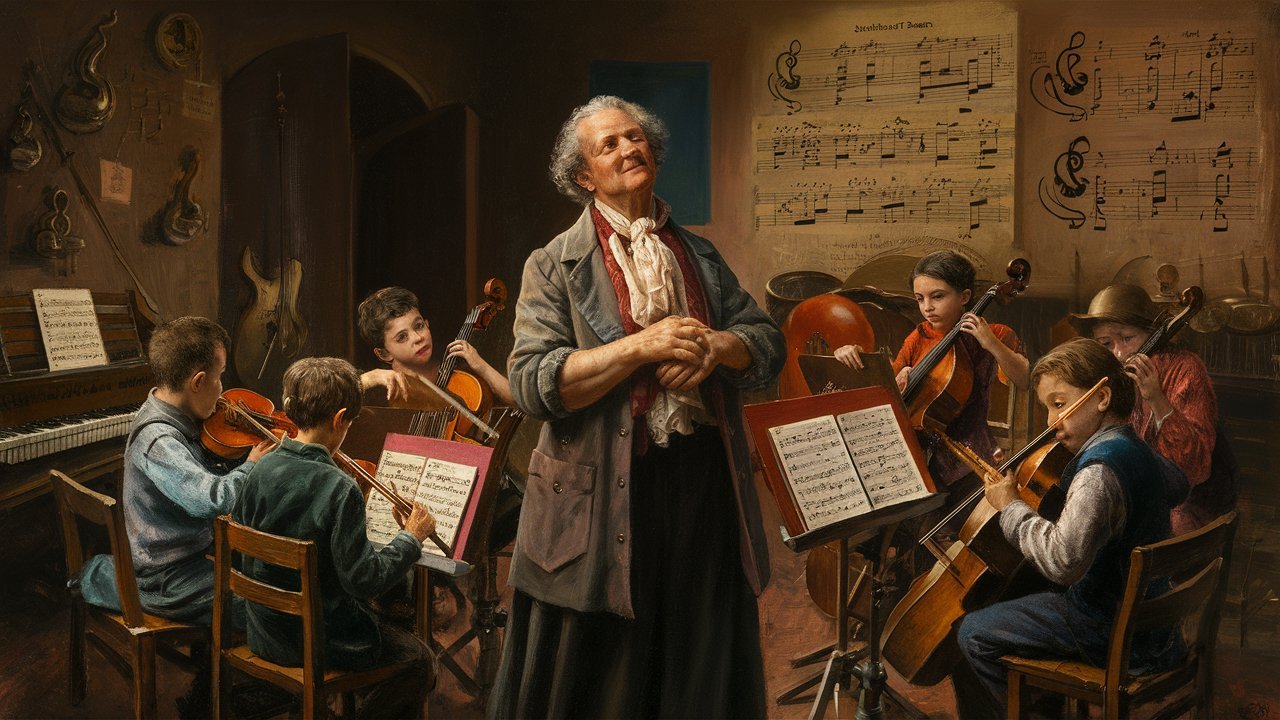
Franz Schubert, one of the most influential composers of the early 19th century, is celebrated for his remarkable ability to blend lyrical beauty with profound emotional depth. While much attention is given to Schubert’s compositions, equally significant is the role of the Schubert teacher in shaping his musical journey. The teachers, mentors, and instructors who guided him during his formative years not only provided technical mastery but also instilled the discipline, creativity, and interpretative insight that would define Schubert’s music. Understanding the impact of a Schubert teacher offers a window into the educational practices of classical music in Vienna during the early 1800s and highlights how mentorship can shape artistic genius.
Early Musical Education: Foundations Laid by Schubert’s Teachers
Schubert’s first exposure to structured music education came from his family environment. His father, a schoolteacher, introduced him to basic musical principles, including singing and keyboard practice. However, it was under formal instruction that Schubert’s natural talent flourished. The Schubert teacher in this context refers not just to private tutors but also to the instructors at the Stadtkonvikt, a prestigious Vienna boarding school for musically gifted children. Here, students received rigorous training in music theory, harmony, and composition. Teachers emphasized precision, technique, and an understanding of classical forms, which gave Schubert the tools to compose with confidence and inventiveness. The influence of these early teachers cannot be overstated: they cultivated his innate abilities while challenging him to push the boundaries of traditional music education.
Mentorship Beyond the Classroom
A defining characteristic of the relationship between a Schubert teacher and their student was mentorship that extended beyond conventional lessons. Schubert’s teachers often acted as guides to the broader musical world, introducing him to Vienna’s vibrant salons, orchestras, and musical circles. This type of mentorship was essential in helping Schubert absorb diverse influences, from the classical clarity of Mozart to the dramatic expressiveness of Beethoven. Teachers encouraged him to experiment with different musical genres, including lieder, symphonies, and chamber music. By providing both guidance and creative freedom, the Schubert teacher played a dual role as both disciplinarian and inspirational mentor, a balance that many modern educators still seek to emulate.
Pedagogical Approach: Techniques and Philosophy
The teaching methods employed by Schubert’s instructors combined rigorous technical training with a deep appreciation for musical expression. Lessons focused on harmony, counterpoint, sight-reading, and performance, but they also emphasized listening and emotional interpretation. Schubert’s teachers encouraged students to internalize music rather than simply reproduce notes, fostering a sense of artistry alongside skill. This holistic approach ensured that Schubert developed not only as a technician but as a composer capable of conveying nuanced emotional narratives. The pedagogical philosophy underlying the Schubert teacher model highlights a timeless principle: the most effective instruction blends technique with inspiration, shaping students into independent, expressive musicians.
Influence on Composition and Style
The impact of Schubert’s teachers is evident in the stylistic elements that define his work. The mastery of form, harmonic innovation, and melodic lyricism found in his lieder and symphonies can be traced back to early guidance and the disciplined training he received. A skilled teacher provided feedback that helped Schubert refine his musical voice, balancing technical rigor with expressive freedom. By fostering experimentation while maintaining high standards, the Schubert teacher left a lasting imprint on his compositional approach, influencing both the structure of his music and the emotional depth that continues to resonate with audiences today.
Modern Reflections: Lessons for Today’s Educators
Examining the role of the Schubert teacher offers valuable lessons for contemporary music education. Modern instructors can learn from the combination of discipline, mentorship, and encouragement that characterized Schubert’s early training. Teachers who nurture talent while promoting creative exploration create environments where students can excel both technically and artistically. The legacy of Schubert’s educators demonstrates that great instruction involves more than teaching technique—it is about fostering curiosity, resilience, and the confidence to develop a unique artistic voice.
Conclusion
The story of Franz Schubert’s musical development is inseparable from the influence of his teachers. From foundational training in early childhood to mentorship that shaped his professional life, the Schubert teacher played a crucial role in nurturing one of the greatest composers in history. Their dedication to technical mastery, emotional expression, and creative freedom allowed Schubert to cultivate a voice that remains timeless. Understanding this relationship underscores the profound impact that a skilled teacher can have on a student’s life, a lesson that transcends time and discipline.
Frequently Asked Questions (FAQs)
Q1: Who was Schubert’s first music teacher?
Schubert’s first teacher was his father, who provided early instruction in singing and basic piano techniques. Later, he received formal training from instructors at the Stadtkonvikt in Vienna, who shaped his compositional skills.
Q2: How did Schubert’s teachers influence his compositions?
Schubert’s teachers provided a foundation in music theory, harmony, and counterpoint, while encouraging experimentation and emotional expression. Their mentorship helped him develop a unique style characterized by melodic lyricism and harmonic innovation.
Q3: What teaching methods did Schubert’s instructors use?
They combined rigorous technical training with a focus on listening, interpretation, and creative freedom, fostering both skill and artistry in their students.
Q4: Can modern teachers learn from the Schubert teacher model?
Yes. The balance of discipline, mentorship, and encouragement is a timeless principle, showing that nurturing talent while allowing creative exploration produces the best results in students.
Q5: Did Schubert have any notable mentors later in life?
While much of his early guidance came from formal schooling, Schubert benefited from friendships and informal mentorships with older composers and musicians in Vienna, which expanded his musical perspectives.
