
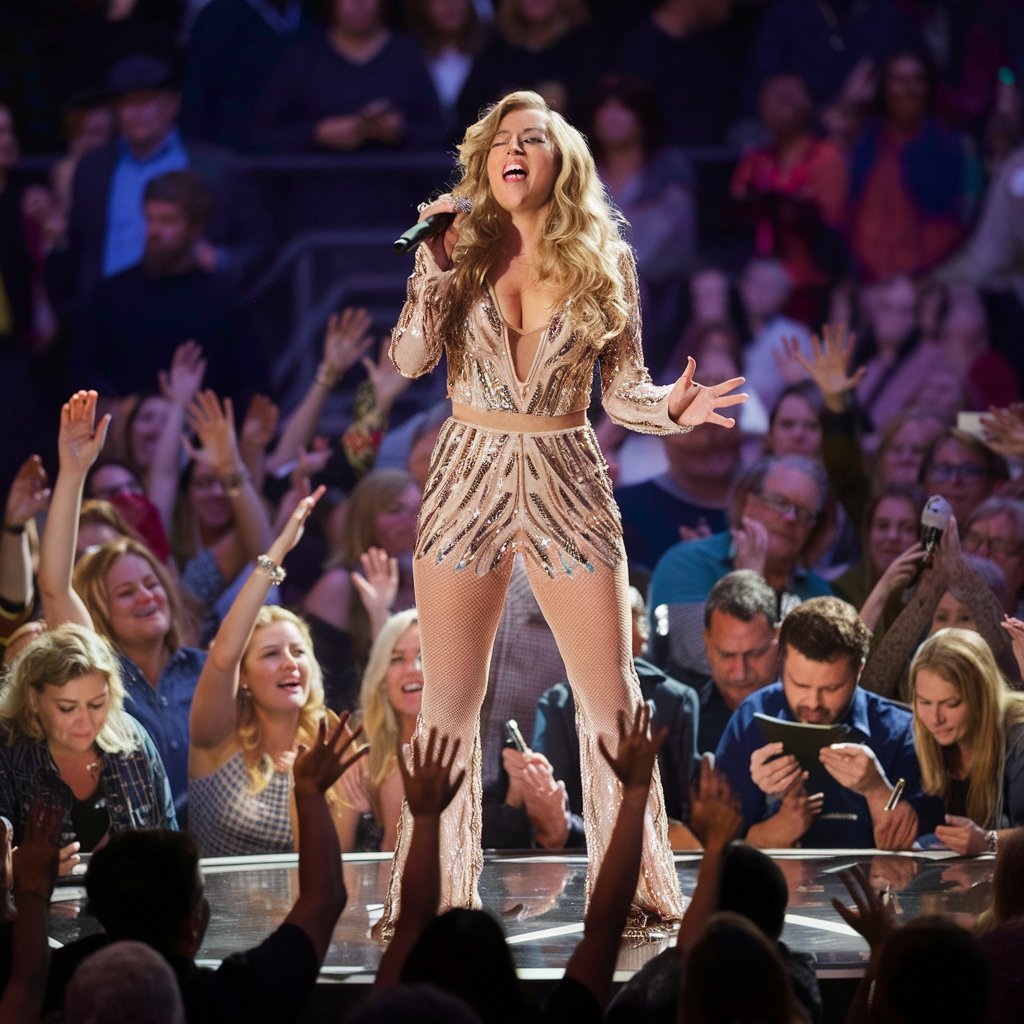
Few live performers in country music create reactions quite like Wynonna Judd. Whether she is stepping onto a major awards-show stage, singing a legacy anthem tied to The Judds, or delivering a stripped-down emotional ballad, audiences rarely respond with indifference. The reason is simple: Wynonna’s performances do not feel manufactured. They feel lived in. Her voice carries history, heartbreak, resilience, and showmanship all at once, which is why so many “wynonna judd performance reactions” center on emotion rather than just technical ability.
In recent years, public discussion around her performances has become even more intense. Fans have praised her unmistakable vocal power and commanding presence, while some televised appearances have also sparked concern, debate, and protective reactions online. At the same time, Wynonna herself has addressed at least some of those reactions directly, making the conversation around her performances not only about music, but also about vulnerability, public expectations, and the burden of legacy. This article explores wynonna judd performance reactions from every angle—fan response, critical commentary, social media discussion, memorable live moments, and why her stage presence continues to matter in modern country music.
Wynonna Judd Performance Reactions and Why They Trend So Quickly
One of the biggest reasons “wynonna judd performance reactions” has become such a searched phrase is that Wynonna does not perform like a disposable pop-culture moment. She performs like someone carrying decades of musical identity onto the stage. That creates stronger audience reactions than a polished but emotionally neutral performance ever could. When viewers watch her, they are not just hearing a singer hit notes; they are witnessing a performer whose life story, family history, and artistic legacy are inseparable from the songs she sings.
This intensity means every appearance gets magnified. When a performance lands well, people describe it as moving, powerful, and unforgettable. When something feels unusual or physically tense on stage, audiences notice immediately and react in real time. That is exactly what happened during some high-profile TV appearances, where social media commentary exploded not only because people were evaluating the vocals, but because they were trying to interpret her body language, emotional state, and overall well-being. In the internet era, that kind of visibility turns ordinary performance chatter into a full public conversation.
Why Wynonna Judd Performance Reactions Are So Emotional
A major part of the fascination around wynonna judd performance reactions is emotional authenticity. Many singers can perform songs well, but not all of them make audiences feel as if they are being invited into something personal. Wynonna has built her career on that kind of connection. Her performances often carry the weight of memory, grief, family, faith, survival, and Southern storytelling, and listeners respond to that honesty in a deeply personal way.
That emotional force becomes especially powerful when she performs songs associated with her years in The Judds or music that evokes family and legacy. For longtime fans, hearing those songs live is not just entertainment; it is memory activation. People remember where they were when they first heard her music, who introduced them to it, and what stage of life it helped them through. That is why performance reactions are often filled with phrases like “I cried,” “I got chills,” or “she still has it.” These are not casual compliments. They are signs that the performance struck something deeper than fandom alone.
Fan Reactions to Wynonna Judd Live Performances
Fan reactions to Wynonna’s live shows are often intensely loyal and emotionally charged. People who have seen her in concert frequently describe her as larger than life without seeming distant. That balance matters. She can command a room like a veteran star, but still come across as warm, spontaneous, and human. Fans often respond strongly to that combination because it feels less like watching a performance from afar and more like participating in a shared experience.
Another recurring theme in fan reactions is surprise at how powerful her voice remains in person. Many concertgoers expect nostalgia from a legacy act, but they leave talking about stamina, vocal strength, and the force of her delivery. Even when there are imperfections or emotionally raw moments, many fans interpret those not as flaws but as proof that the performance was real. That authenticity is part of why her supporters remain fiercely protective. They do not merely admire her talent—they feel connected to her journey, and that emotional investment shapes the way they react to every appearance.
Wynonna Judd Performance Reactions on Social Media
Social media has completely changed the way people talk about live performances, and wynonna judd performance reactions are a perfect example of that shift. In earlier decades, audience impressions might have stayed inside concert halls, newspaper reviews, or fan clubs. Now, every televised appearance can trigger thousands of immediate reactions across platforms within minutes. That speed can be both beneficial and brutal.
On the positive side, social media allows fans to celebrate standout moments instantly. Powerful notes, emotional tributes, and iconic stage chemistry often get clipped, reposted, and praised by viewers who may not even be longtime country fans. But the downside is that social media also encourages speculation. If an artist appears nervous, still, emotional, or physically uncomfortable, viewers often jump to conclusions before context is available. That happened with some of Wynonna’s more discussed recent appearances, where concern, criticism, and over-analysis all collided online at once. The result is that performance reactions now reflect not only what happened on stage, but also the internet’s tendency to turn every unusual moment into a public mystery.
The Most Talked-About Wynonna Judd Performance Reactions in Recent Years
If you are researching wynonna judd performance reactions, one of the most discussed examples in recent years came from her televised awards-show appearances, especially the conversations that followed the CMA Awards and other nationally visible performances. Some viewers focused on her vocal presence and stage gravity, while others became concerned about how still or tense she appeared while performing. The online response was immediate and intense, which showed just how closely audiences still watch her.
Importantly, Wynonna later addressed at least part of the concern herself, explaining that nerves played a major role in how she appeared on stage during one of those widely discussed moments. That response shifted the conversation for many fans. Instead of reading the performance only as something “wrong,” some people began viewing it through a more human lens: as a reminder that even iconic performers can feel pressure, vulnerability, and stage anxiety. That nuance is important, because not every unusual live moment should be treated like a scandal. Sometimes it is simply evidence that a performer still cares deeply about what happens when the spotlight turns on.
How Critics Describe Wynonna Judd Performance Reactions
Critics often approach performances differently than fans do. Fans may focus on how a performance made them feel, while critics tend to evaluate stagecraft, vocal control, interpretation, and consistency. In Wynonna’s case, those two worlds often overlap. Even critical commentary tends to acknowledge that she brings an emotional charge to the stage that cannot be faked or easily taught.
Writers and reviewers frequently note that Wynonna’s performances stand out because she does not over-sanitize them. There is often a sense of risk in what she does live, and that risk can be compelling. She may lean into grit rather than perfection, and that gives her performances a lived-in quality that many critics find more memorable than technically flawless but emotionally empty shows. In a music landscape that often rewards smoothness over substance, Wynonna’s ability to leave a strong impression—positive, complicated, or both—is part of what keeps her culturally relevant.
Wynonna Judd Performance Reactions and the Power of Legacy
It is impossible to fully understand wynonna judd performance reactions without understanding legacy. Wynonna is not just performing as an individual artist; she is also carrying the emotional and musical history of The Judds. That legacy adds extra weight to every appearance. When she sings songs connected to her family story, audiences are not simply hearing a catalog of hits. They are hearing a living continuation of one of country music’s most emotionally resonant legacies.
That is part of why reactions can be so intense. For some fans, watching Wynonna perform now feels like both a celebration and a reckoning. It is a reminder of where country music has been, what it has lost, and what still survives through live performance. Legacy can make even a simple stage appearance feel monumental, because audiences are responding not just to what she is doing in the moment, but to everything that performance represents.
Why Audiences Still Connect With Wynonna Judd on Stage
In an industry obsessed with reinvention, Wynonna’s greatest strength may be that she has never seemed eager to erase herself in order to fit a trend. That consistency matters. Audiences often respond strongly to artists who feel grounded in who they are, and Wynonna has maintained a distinct identity across decades of cultural change. Her voice is recognizable. Her presence is recognizable. Her emotional honesty is recognizable. That kind of artistic clarity is rare.
Audiences also connect with her because she does not perform from a place of distance. Even when she appears commanding or theatrical, there is still something emotionally accessible in the delivery. She can feel both iconic and exposed at the same time. That tension is one reason her performances are so memorable. They do not feel like museum pieces from a legacy artist checking off old hits. They feel alive, and alive performances almost always create stronger reactions than polished but emotionally sealed ones.
What Wynonna Judd Performance Reactions Reveal About Modern Celebrity Culture
The conversation around wynonna judd performance reactions also says something larger about celebrity culture today. Modern audiences do not just watch performances; they interpret them, diagnose them, debate them, and repost them. That can create visibility, but it can also create distortion. A single clip, screenshot, or facial expression can quickly become the center of a narrative that says more about internet culture than the actual performance itself.
Wynonna’s case is especially revealing because she is an artist whose performances naturally contain intensity and unpredictability. That means she is more vulnerable to over-interpretation than someone whose stage presence is tightly controlled and emotionally neutral. Her performances remind us that real artistry often includes moments that are messy, surprising, and difficult to categorize. Ironically, those are often the moments people remember most. In that sense, the strongest wynonna judd performance reactions are not just about whether people liked what they saw. They are about whether the performance felt undeniably human.
Conclusion
Wynonna Judd performance reactions remain powerful because Wynonna Judd remains a powerful live artist. Her performances continue to trigger applause, nostalgia, concern, admiration, debate, and deep emotional connection—not because she is chasing headlines, but because she still brings something real to the stage. In a time when so much live entertainment feels optimized for clips rather than impact, her presence still feels rooted in feeling.
That is why people keep searching for “wynonna judd performance reactions.” They are trying to understand not only what happened in a particular performance, but why it affected them so strongly. Whether the reaction is praise for her voice, discussion about her stage presence, or reflection on the emotional legacy she carries, one thing stays consistent: Wynonna rarely leaves audiences unmoved. And for a performer with decades behind her, that may be the strongest proof of relevance there is.
Frequently Asked Questions (FAQs)
1. Why are wynonna judd performance reactions so emotional?
They are often emotional because Wynonna’s performances feel deeply personal rather than purely technical. Fans respond not just to her voice, but to the sense of history, grief, strength, and authenticity she brings to the stage. That emotional honesty creates stronger reactions than a more polished but emotionally distant performance.
2. What recent performance brought the most attention to Wynonna Judd?
One of the most talked-about recent moments came after her widely discussed televised appearances, especially the CMA-related performance conversations that sparked both fan concern and heavy online commentary. Those appearances became major discussion points because viewers closely analyzed both her vocals and stage presence.
3. Did Wynonna Judd respond to fan concern about her performance?
Yes. After one of the most discussed performances, Wynonna publicly addressed the reaction and explained that nerves played a role in how she appeared on stage. That response helped many fans see the moment with more empathy and context.
4. Do fans still enjoy Wynonna Judd live in concert?
Yes, many fans continue to describe her live shows as powerful, moving, and vocally impressive. Concert reactions often emphasize that her voice still carries strength and emotional force, especially in songs connected to her legacy and personal storytelling.
5. Why do social media reactions to Wynonna Judd performances spread so fast?
They spread quickly because Wynonna is a legacy artist with a highly recognizable stage presence, and audiences tend to react strongly when a performance feels especially emotional, unusual, or vulnerable. Social media amplifies those moments immediately, often turning a performance into a larger cultural conversation.
